Do You Need to Signal When Reversing Into a Parking Bay?
The Clear Truth for Learner Drivers (DVSA-Aligned Guidance)
If you’re learning to drive, you’ve probably heard different opinions about whether you should use your indicator when reversing into a parking bay. Some instructors say always indicate, some say never, and others say only if there’s someone around. No wonder learners feel confused — even experienced drivers disagree!
So let’s clear it up properly, using guidance based on the Highway Code and DVSA driving test assessment standards, and help you understand what examiners are really looking for.
The Short Answer
There is no rule that says you must always use your indicator when reversing into a bay.
The most important thing is:
Use a signal only if it helps other road users understand what you are going to do.
Your Reversing Lights ARE an Official Signal
This is the part most people don’t realise — and where all the confusion starts.
According to the Highway Code (Signals to other road users), one of the recognised signals is the:
Reversing-light signal
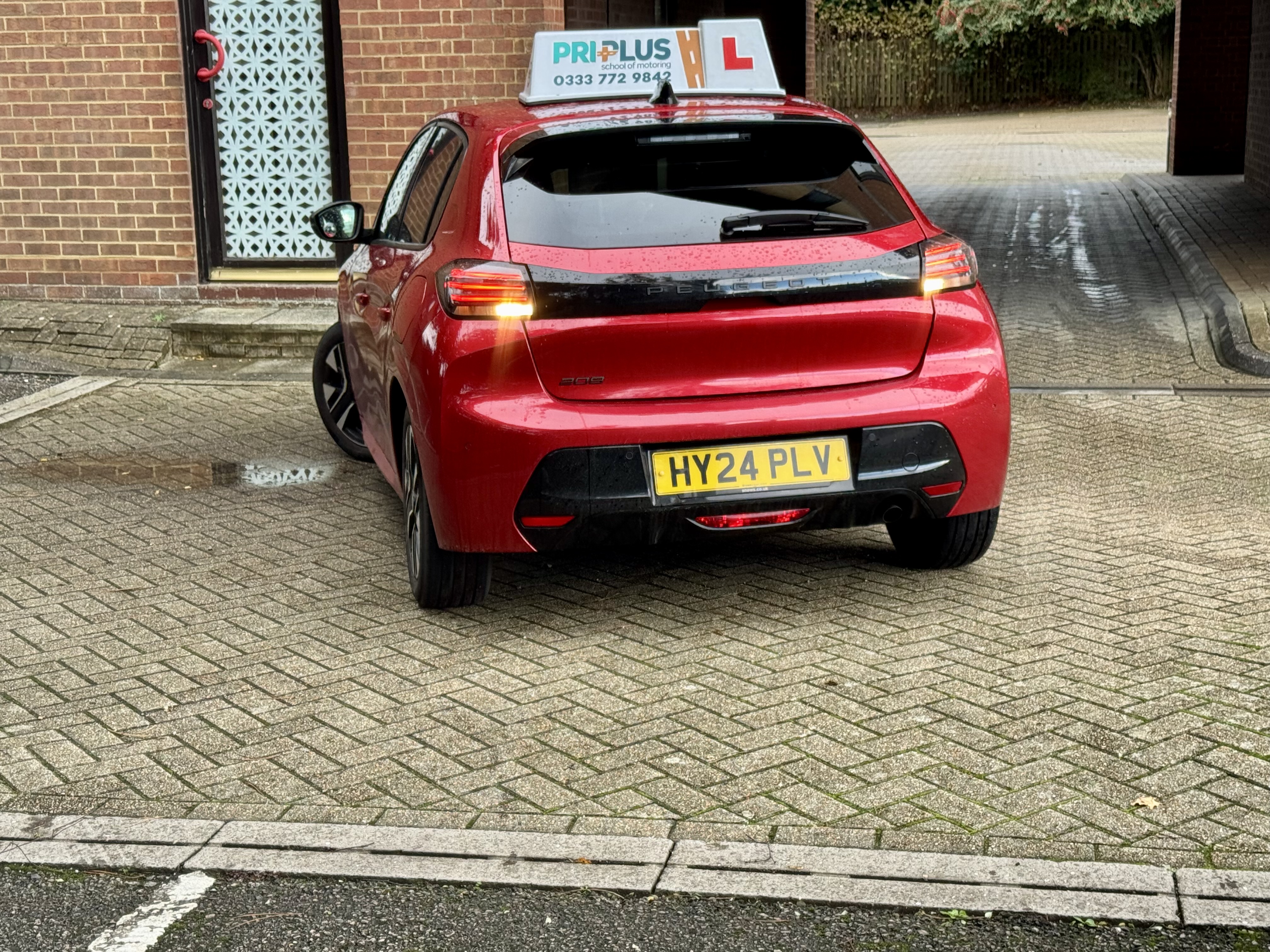
When you select reverse gear, your white reversing lights illuminate. These lights tell other drivers and pedestrians that you intend to reverse, including when manoeuvring into a bay.
So in many situations, your reversing lights are all the signalling you need.
That means you do not have to automatically use your left or right indicator every time.

When Should You Use Your Indicator?
Use your direction indicator only when it would clearly benefit someone else, such as:
- A car is approaching behind you and may not expect you to reverse
- Pedestrians are walking nearby and need clear warning of your intentions
- You are crossing from one lane of a car park to another to position for the bay
- Visibility is limited and your reversing lights alone might not be obvious
If a signal helps, use it. If it adds confusion, don’t.
That is the rule the DVSA examiner will apply.
When You Should Not Indicate
If there are no other road users around, and your indicator might make someone believe you’re turning, not reversing, using the indicator can cause more confusion than clarity.
Example:
Reversing into a bay on your left.
Left indicator could make someone think you are driving forward into a space, not reversing backwards — which is misleading.
In these cases, reversing lights alone are safer and clearer.
What the DVSA Looks for on the Driving Test
Examiners assess:
- Observation
- Accuracy
- Vehicle control
- Safety
- Use of signals only when necessary
There is no automatic fault for not indicating or for indicating — the key is whether the decision was appropriate and safe for the situation.
PriPlus Instructor Advice
We teach learners to think like safe real-world drivers, not just test-pass robots. Our guidance:
Think, pause, check surroundings, then decide whether a signal helps.
If someone benefits, signal.
If not, let your reversing lights do the job.
This builds judgment, confidence, and safety — not just memorisation.
Key Takeaways (Easy Learner Summary)
| Question | Answer |
|---|---|
| Do I always have to indicate when reversing into a bay? | No |
| What is the official signal for reversing? | Reversing lights |
| When should I use an indicator? | Only if it clearly benefits others |
| Will I fail my test for not signalling? | Only if it affected safety or other road users |
Final Word
Safe driving isn’t about doing everything automatically.
It’s about thinking and communicating clearly with other road users.
At PriPlus, we help learners build practical judgment — not rush through shortcuts or confusing “always” rules.
Ready to learn safely and confidently?
Book lessons with a qualified local instructor today:
No hidden fees. No confusing rules. Just proper training that lasts.
Start your driving journey the right way with PriPlus school of Motoring
Web: priplus.co.uk - Email: [email protected] - Tel: 0333 772 9842
This article is for general driving guidance and educational purposes only. It summarises relevant elements of the Highway Code and DVSA driving test frameworks but does not replace official documentation or professional driving instruction. Always follow current UK driving laws and advice from qualified instructors.