Why Interfering with a Lesson is Dangerous
Learning to Drive is a Legal Right: Why Interfering with a Lesson is Dangerous and Illegal
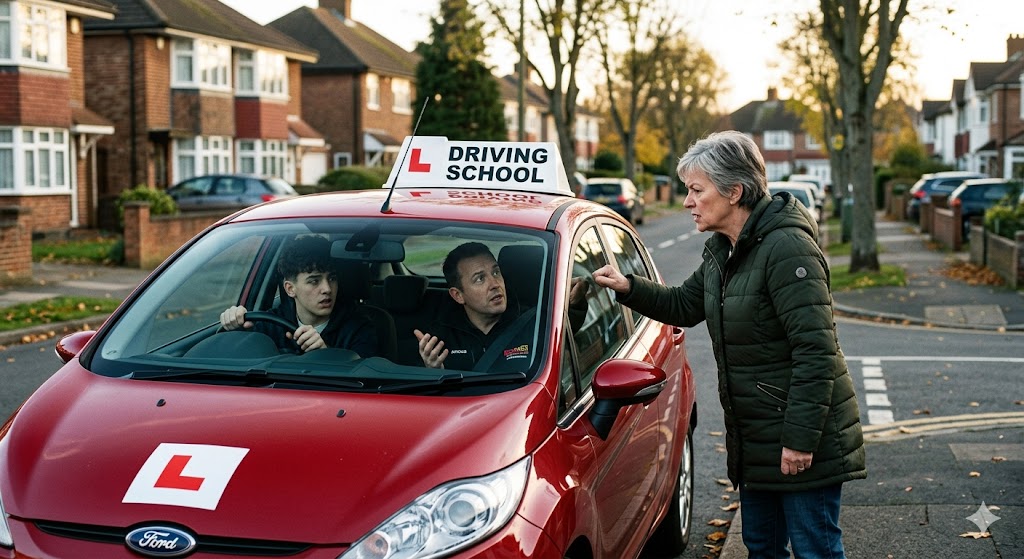
We all share our local roads, and it is entirely natural for residents to value the peace, quiet, and safety of their neighborhoods. However, a growing and troubling trend has emerged across the UK: members of the public actively approaching stationary or maneuvering tuition vehicles to demand they "go and do that somewhere else."
While you might believe you are simply making a polite request, approaching a driving lesson to confront the driver or instructor is not just unhelpful—it is a serious breach of both safety and the law.
Here is what you need to know about why interfering with a driving lesson is entirely unacceptable, the severe risks it poses, and the legal consequences you could face.
1. What the Law Says: It is a Criminal Offence
A professional driving lesson is a legally sanctioned activity. Learner drivers have the absolute right to use public highways to practice and prepare for their tests.
When a member of the public approaches a car, knocks on the window, blocks the vehicle, or aggressively shouts at the occupants, they are breaking the law. Specifically, interfering with a lesson can violate multiple UK statutes:
- The Road Traffic Act 1988 (Section 22A): Under this Act, it is a criminal offence if a person intentionally, and without lawful authority, interferes with a motor vehicle or traffic in a way that would be obvious to a reasonable person to be dangerous. Confronting a driver while they are in control of a vehicle, causing a distraction, or forcing them to move unexpectedly easily meets this criteria.
- The Public Order Act 1986 (Section 4A or 5): If a person uses threatening, abusive, or insulting words or behavior that causes alarm, harassment, or distress to the learner or the instructor, they are committing a public order offence.
- Protection from Harassment Act 1997: Repeatedly targeting tuition vehicles or specific instructors in a neighborhood constitutes a course of harassment, which is a arrestable criminal offense.
Please Note: Modern tuition vehicles are routinely fitted with front, rear, and interior high-definition dash cams. Any member of the public who approaches a vehicle aggressively or illegally blocks a lesson is highly likely to be recorded, and this footage will be passed directly to the Police to support a prosecution.
2. The Safety Risks: Creating Real Danger
The space inside a tuition vehicle requires intense concentration. A learner driver is working hard to process clutches, gears, mirrors, steering, and vulnerable road users all at once.
When you knock on a tuition car window or confront the occupants, you trigger a chain reaction of safety risks:
- Sudden Panic Responses: Learners do not have the muscle memory or emotional resilience of experienced drivers. Shocking or intimidating a learner can cause them to panic, slam their feet onto the wrong pedals, or steer erratically—potentially striking pedestrians or oncoming traffic.
- Blinded Instructors: A driving instructor’s primary job is to scan the outside environment to keep the vehicle safe. When you approach the window to argue, you force the instructor to turn their attention away from the road, effectively leaving the vehicle without its vital safety supervisor.
- Creating a Hazard: By stopping a vehicle or forcing it to abandon a maneuver halfway through, you frequently leave the car stranded in a dangerous position, obstructing visibility for other road users and causing unnecessary traffic backlogs.
3. An Advisory Note to Our Neighbors
We understand that seeing a car practice reversing or doing a turn-in-the-road outside your house can occasionally feel repetitive. However, we ask you to consider the following:
- Every Driver Started Here: Every safe driver on the road today once relied on the patience of strangers while learning.
- Lessons are Temporary: Professional instructors vary their routes constantly. A car will rarely be outside your home for more than a few minutes before moving on.
- It is the Safest Environment: Practicing in a quiet, residential area is a mandatory step in the DVSA learning curriculum. It allows new drivers to learn control before entering high-speed or high-density traffic.
How to Properly Handle Concerns
If you genuinely believe a tuition vehicle is being driven in a way that is fundamentally unsafe, do not approach the car. Instead, take note of the driving school's name and the car's registration plate, and report your concerns calmly via the school's website or telephone number.
Let the learner drive in peace. Your patience directly contributes to making them a safer, more considerate driver for the future.
At Pri Plus, our focus is on teaching our Learners to drive safely. Click here to find a Pri Plus Driving Instructor in your area - or call us on 0333 772 9842 to book your first lesson and take your first, safe step toward a full UK driving licence.